





Capital allowances for construction
‘Capital allowances are a group of UK income tax and corporation tax reliefs that are available to businesses for capital expenditure. Capital expenditure creates an asset or advantage with enduring benefit and is usually recorded as a fixed asset on the balance sheet in the financial accounts. Examples are expenditure upon land, buildings and equipment.’ Ref Capital allowances and land remediation relief, 1st edition, guidance note (GN 111/2013) published by the Royal Institution of Chartered Surveyors (RICS) July 2013.
Capital allowances can play a big part in the development of a business case for a project and in setting budgets.
The client is allowed to deduct capital allowances from taxable profits. These relate to the cost of certain assets such as:
- Plant and machinery (lifts, escalators, mechanical and electrical plant, information and communications technology, equipment, furniture, fittings and office equipment).
- Thermal insulation for industrial buildings.
- Making certain buildings comply with the part B of the building regulations (fire safety).
- Safety measures for sports grounds and stadia.
- Security systems if there is a special threat to the use of the building.
- Scientific research and development facilities.
- Enterprise zones in relation to industrial and commercial buildings, including hotels.
The tax relief allowed relates to the reduction in value (depreciation) of the qualifying assets. The percentage of annual depreciation depends on the item claimed and the size of the business making the claim.
The percentage of annual depreciation depends on the item claimed and the size of the business making the claim. The client's finance director or in-house tax team may quantify the level of qualifying expenditure, or they may appoint a specialist capital allowances advisor. Capital allowances services are offered by specialist boutique firms, large and mid tier accountancy firms (who employ chartered surveyors) and cost consultants.
The size of the company and tax dates will affect the decision-making process and the cost consultant will have to pull out real cost data upon which annual depreciation allowances are calculated.
[edit] Related articles on Designing Buildings
- Base construction.
- Building Regulations.
- Business case.
- Budget.
- Capital.
- Capital allowances and super deductions.
- Capital costs.
- Capital gain.
- Capital gains tax.
- Cost consultant.
- Cost plans.
- Depreciation.
- Enhanced Capital Allowance scheme.
- Equipment.
- ECA Water Scheme.
- Financial year.
- Fit out.
- Industrial buildings allowance (IBA)
- Land remediation relief.
- Net Present Value.
- Tax.
[edit] External references
- HMRC: Capital allowances.
Featured articles
Check out some of the best features and news from Designing Buildings as well as key stories from around the web.
An extraordinary record of steel engineering worldwide.

Households living near new pylons to save on bills.

ECA warns growth must not outpace grid capacity or skills.
The role of the client and decision making

CIOB response to built environment professions call for evidence.
Construction's sustainability reporting revolution
Tracking upfront embodied carbon with digital tools.
ECA welcomes procurement reforms

Public spending must back British jobs and skills.
Campaigning for Edinburgh: the Cockburn Association 1875-2049

The role of the civic voice in protecting character. Book review.

CIOB photography competition is open for entries.
ECA Edmundson apprentice of the year award

Finalists announced.
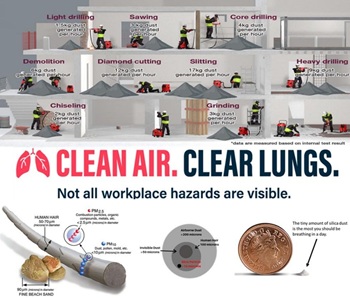
Major new study exposes serious knowledge gaps.

Generating energy from internal light as well as sunshine.

ECA welcomes plans to strengthen subcontractor quality control.